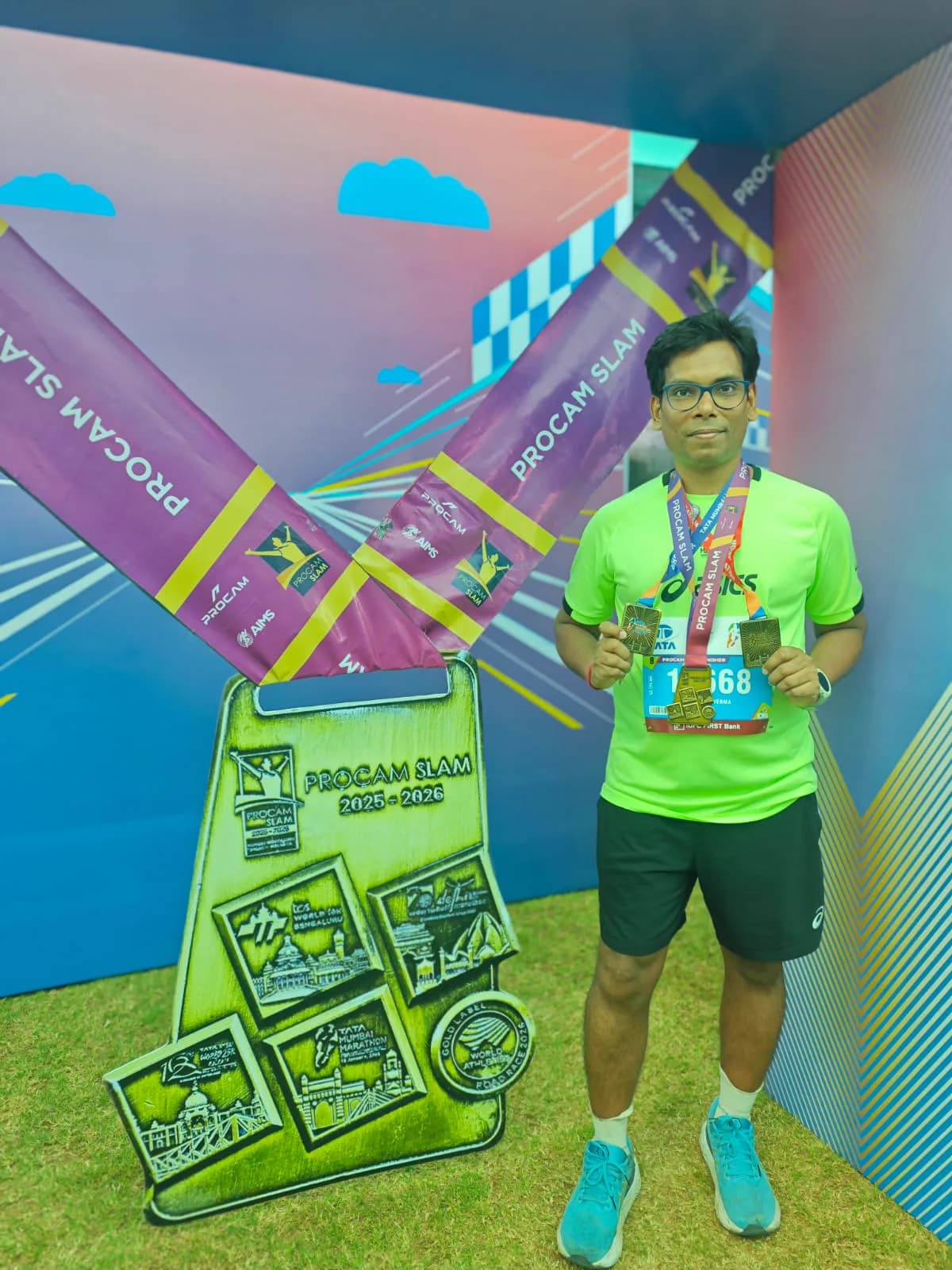
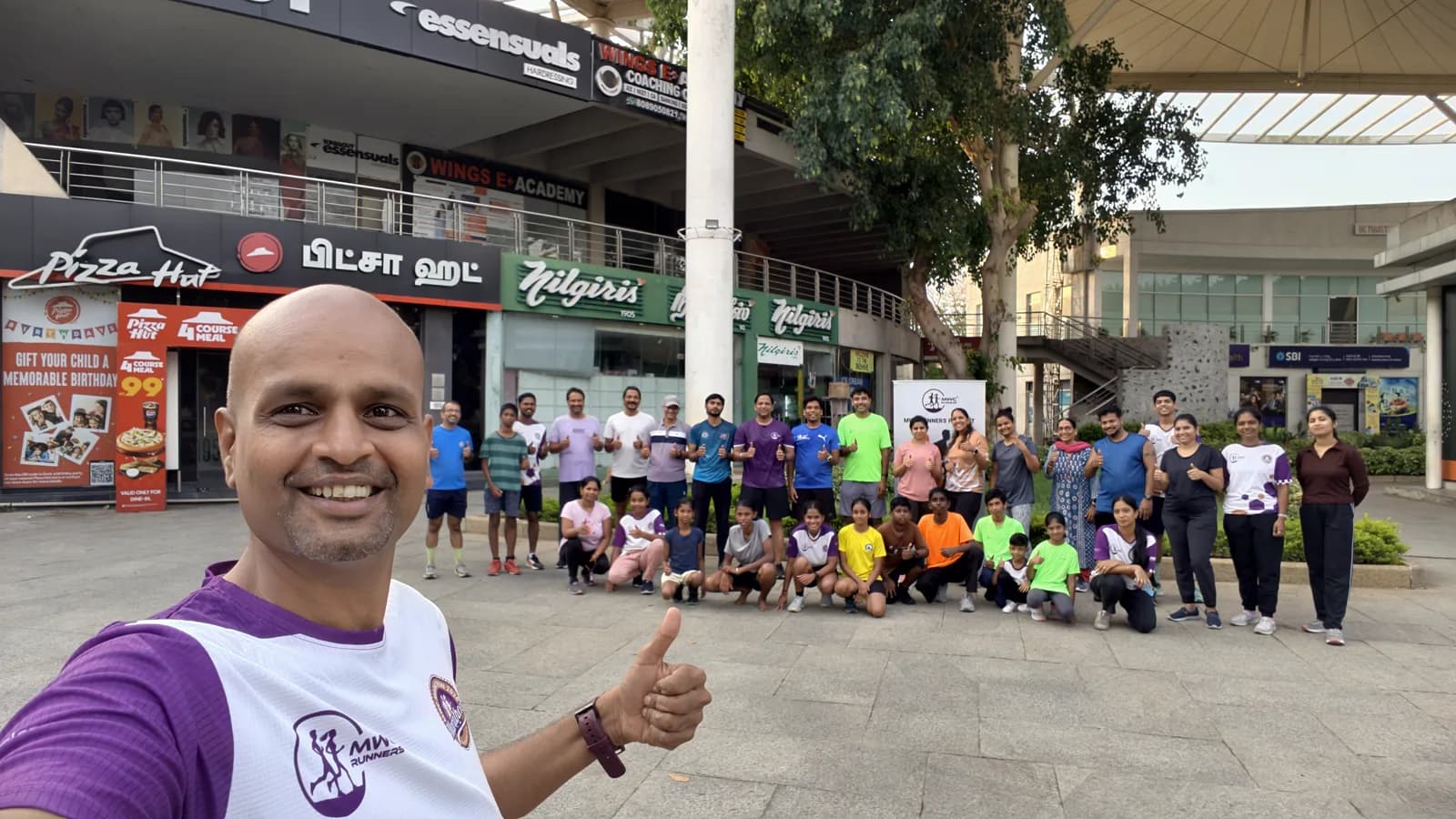
Ponniselvan K · Vice President
The Coach You Already Have
What 199 laps taught Ponniselvan about listening to your body

“The body is remarkably intelligent. It tells us when to push. It tells us when to recover. It tells us when to fuel. It tells us when to rest. Our responsibility is to listen.”
— Ponniselvan K
Twelve hours. One stadium track. 199 laps. 81.59 kilometres, run from dusk until dawn at the Salem Moonlight Track Run. Somewhere in the middle of that night, Ponniselvan learned a lesson no training plan, sports watch, or influencer reel could have taught him: your body is your greatest coach.
There is no one plan that fits all
The fitness world loves a universal formula. Ponniselvan has run enough kilometres to know it doesn't exist. Some runners thrive on high mileage; others perform better with lower mileage and more recovery. Genetics, age, training history, sleep, stress — every runner carries a different set of variables. The takeaway isn't to copy the fastest person in the group. It's to understand your own body well enough to know what actually works for you.
What 199 laps taught him
Going into the race, everything was right on paper — pacing strategy, nutrition plan, hydration schedule. And yet, as the night wore on, the body refused to follow the script. Legs that should have been tired felt strong. Fatigue showed up when the pace felt easy.
So instead of trusting the numbers on his watch alone, he kept checking in: How do my legs feel right now? Am I drinking enough? Should I eat before I feel hungry? Is this pace actually sustainable? Those quiet check-ins, repeated for twelve hours, are what carried him to the finish.
The body whispers before it shouts
Long before injury or burnout arrives, the body sends warnings — and most athletes learn to override them: persistent soreness, heavy legs, poor sleep, falling motivation, rising fatigue. Listening to these signs isn't an excuse to avoid hard work. It's knowing precisely when to push — and when to hold back.
Recovery isn't the opposite of training; it's part of it. Quality sleep, proper nutrition, hydration, mobility work, deliberate rest — that's where the real growth happens. His challenge to the club: be as proud of the rest day as the hard session.
The real finish line
Grit gets glorified. But real mental strength includes restraint: sometimes courage means running through discomfort, and sometimes wisdom means slowing down. The best training program is not the hardest one — it's the one you can sustain consistently for years.
With a 24-hour stadium run now on the horizon, his message to every MWC runner is the same: run your race, train according to your body, fuel according to your needs, recover according to your ability.