Ashok S · Treasurer
The Cost of Lightness
Why nutrition and strength trump weight loss in running
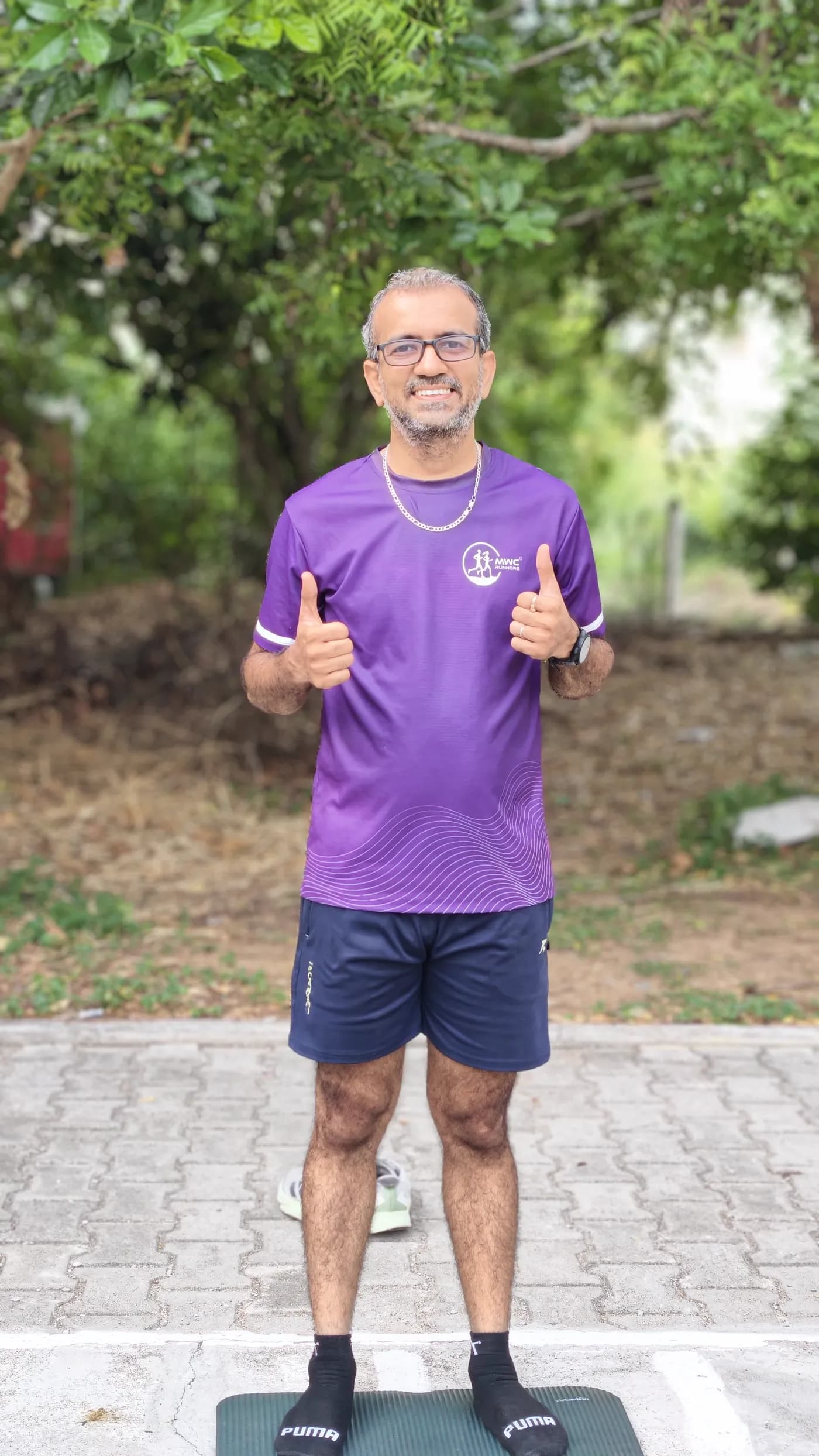
“Running clubs are more than training groups — they are families that carry you when your own legs cannot. Every comeback story needs a community, and mine was powered by theirs.”
— Ashok S
The reckless beginning
When the pandemic hit in 2020, running became Ashok's escape. With no structured training, he crossed his first half-marathon line in 2:40 — and it became what he now calls a gateway drug. Longer distances followed fast: 32 km training runs, multiple marathons, eventually the demanding Ooty Ultra 60K. His lungs felt limitless. His bones, quietly, were crumbling under a load his body was never given the resources to handle.
The fatal mistake
Chasing a personal best at the Hyderabad Marathon, Ashok fell for one of the sport's most persistent myths: lighter means faster. He slashed 6 kg in 10 days, living on juices and semi-solid dinners. The cost was steep — bones starved of calcium, vitamin D3 and protein. Mid-race, under the relentless pounding of the marathon distance, his tibia fractured. The illusion of lightness shattered, quite literally.
Nine months of forced rest taught him truths he now believes every runner should engrave into their training: nutrition first — mileage means nothing if your body cannot repair itself. Weight is not speed. Ambition can push you through ultras, but biology always wins. Recovery is training. Low energy availability weakens bones, hormones and immunity.
Building neuromuscular armor
The rebuild had two pillars: heavy lifting for structural strength, and dynamic drills for shock absorption. Barbell and front squats for knee stability; Bulgarian split squats against imbalances; calf raises — standing, seated, single-leg — for push-off power and endurance; tibialis raises to protect the shin; deadlifts, hip thrusts and band walks for pelvic stability; plyometrics to teach safe landings.
Together, this built what Ashok describes as a muscular shield — capable of absorbing roughly 80 percent of impact before it ever reaches bone.
The comeback rules
Returning after nine months away was terrifying — every step carried the ghost of the injury. So he set non-negotiable rules: progressive loading, never sudden jumps. Nutrient-dense meals as a default, not an option. Mandatory strength work. Shoes replaced every 1,000–1,200 km. And accepting fear as part of recovery, not a barrier to it.
Through nine months on the sidelines, the club kept motivating him, kept reminding him that setbacks are temporary. Today he runs differently — not to outrun biology, but to work with it.